2026-10-02
Could You Be a Complex Dental Implant Case? From Sinus Lifts to Revision Surgeries: Understanding High-Difficulty Dental Implants
Explore high-difficulty dental implant cases, including severe bone loss, proximity to the inferior alveolar nerve, sinus lifts, and revision surgeries, and how Haruplant Clinic handles them.
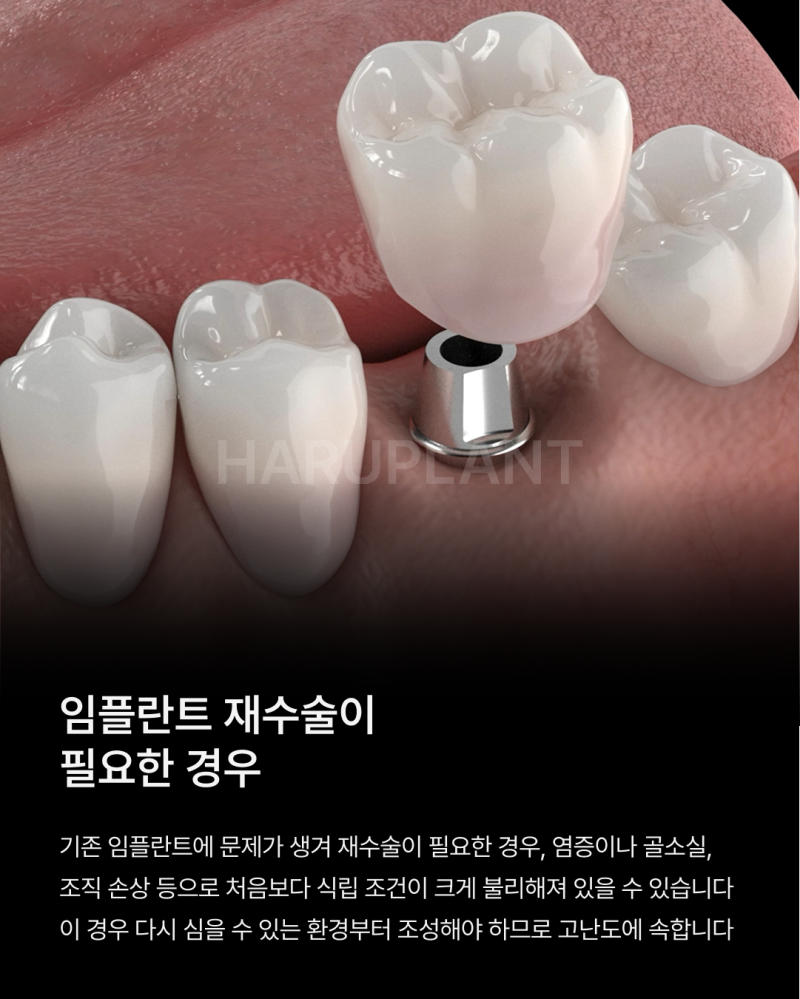
Could You Be a Complex Dental Implant Case? From Sinus Lifts to Revision Surgeries: Understanding High-Difficulty Dental Implants
Hello,
Starting your comfortable day with Haru, this is Haruplant Dental Clinic.
A dental implant is a treatment that restores the function and aesthetics of natural teeth when they are lost or damaged beyond repair,
by placing an artificial tooth root into the missing tooth site and attaching a dental prosthesis.
However, depending on various variables such as the degree of tooth loss, oral condition, unique anatomical structures, and alveolar bone status,
the surgical approach and difficulty can vary significantly even for the same implant procedure.
In clinical practice, we encounter a wide variety of challenging cases,
and today, we would like to discuss some of the most representative types of high-difficulty dental implants.
What are the cases considered the most demanding in implant dentistry?
Cases with Severe Bone Loss or Poor Bone Quality
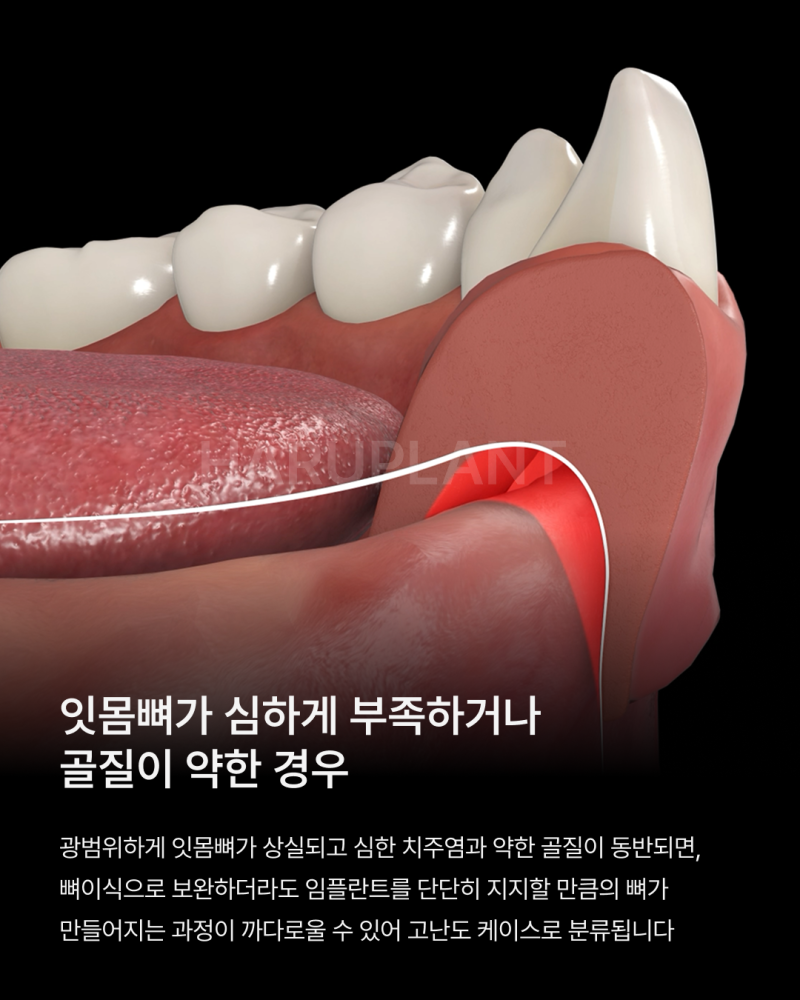
For an implant to function stably, it must be firmly integrated into the alveolar bone (jawbone).
However, if there is extensive alveolar bone loss due to severe periodontal disease or prolonged tooth loss, coupled with poor quality of the remaining bone,
the bone grafting process itself to rebuild enough bone to support the fixture can be highly demanding, classifying it as a high-difficulty implant case.
In such situations, it is essential to evaluate the volume, morphology, and density of the remaining bone to determine the necessary graft scope,
and carefully plan the optimal position and angulation for secure implant placement.
Cases Closely Adjacent to the Inferior Alveolar Nerve
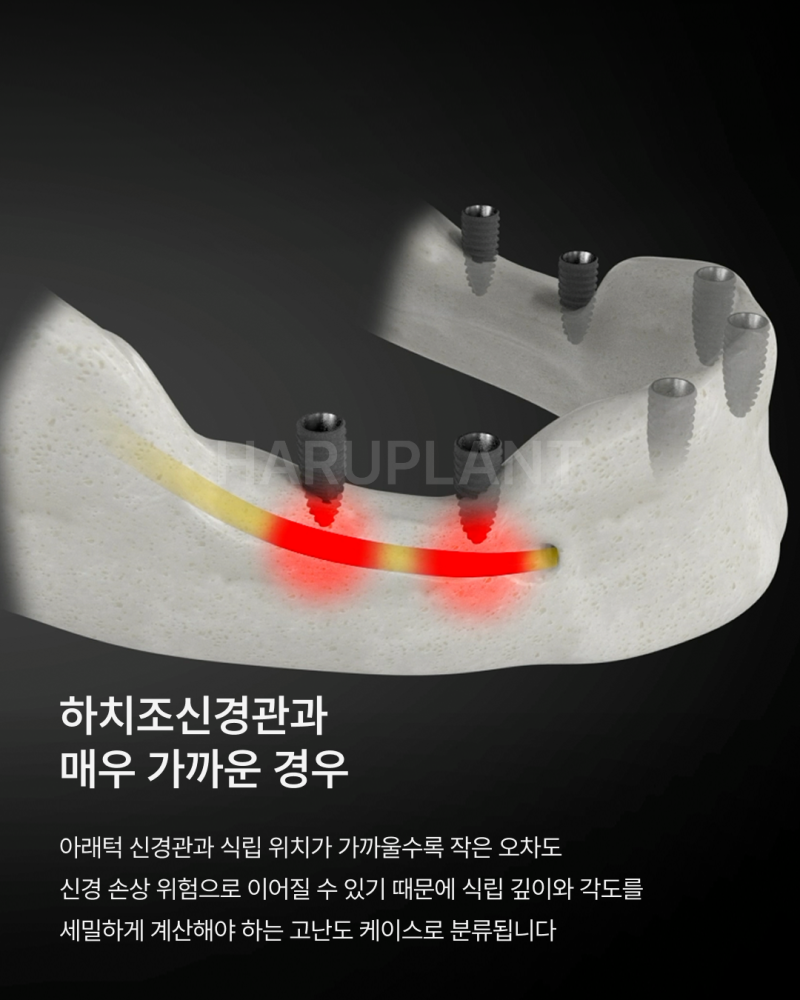
The inferior alveolar nerve, which is responsible for sensation in the lower lip and chin, runs through the lower molar area.
In some patients, the planned implant site is separated from this nerve canal by only a few millimeters.
In these cases, even the slightest margin of error can lead to nerve damage, requiring extremely precise calculations of placement depth and angulation,
making it a notably complex implant procedure.
At Haruplant Dental Clinic, we thoroughly assess the nerve canal location and remaining bone height using 3D CT,
and leverage the clinical experience and expertise of our medical staff specialized in complex implant surgeries
to calculate safe coordinates that bypass the nerve while ensuring stable fixation, which is then meticulously applied during actual surgery.
Cases Requiring a Sinus Lift (Sinus Augmentation)
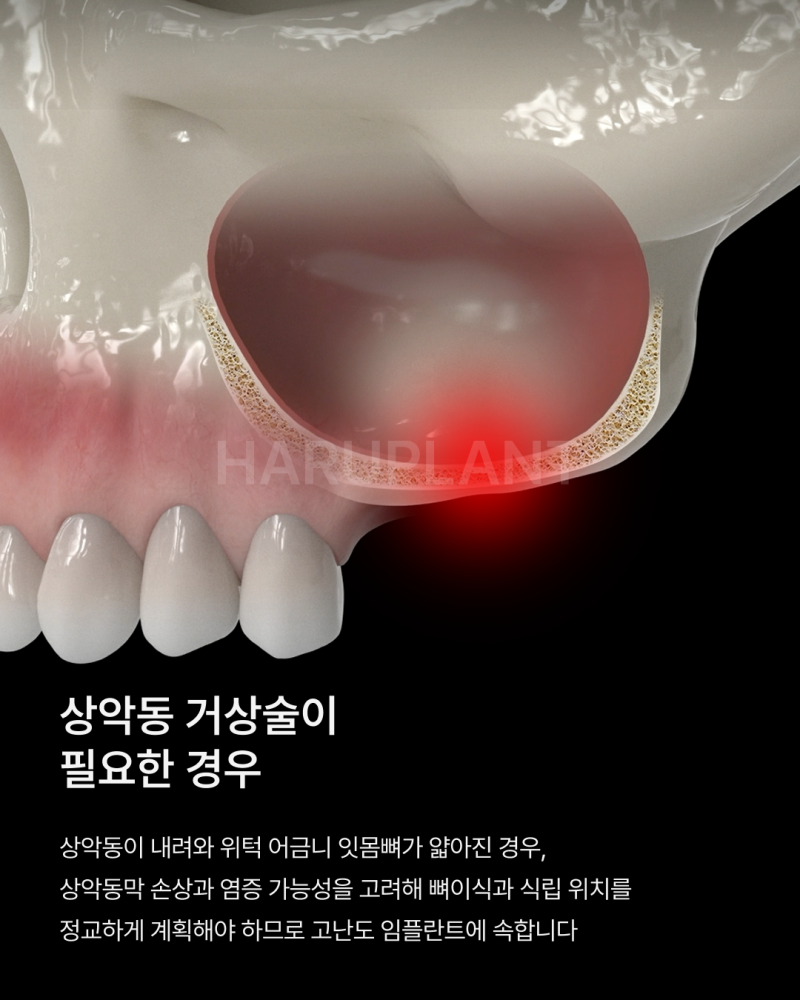
Above the upper molars lies an air-filled space called the maxillary sinus.
When teeth have been missing for an extended period, the sinus floor gradually pneumatizes and drops downward, resulting in thinning of the alveolar bone.
When the remaining jawbone is deemed insufficient to stably support an implant, a sinus lift is considered.
A sinus lift involves carefully elevating the delicate Schneiderian membrane to create space,
which is then packed with bone graft material to establish the necessary foundation for secure, stable implant placement.
Because the procedure demands sophisticated surgical technique to avoid tearing the thin sinus membrane,
while simultaneously planning the graft volume and implant position to achieve optimal primary stability,
the surgical difficulty is inherently high.
Cases Requiring Dental Implant Revision Surgery
Implant revision surgery is performed when problems arise with a previously placed implant, requiring retreat.
Patients seeking revision often present with inflammation (peri-implantitis), bone loss, or surrounding tissue damage,
meaning the surgical conditions are significantly more compromised than in initial placements.
When re-initiating treatment in a site where failure has already occurred,
the clinician must restore the compromised or damaged oral environment
while devising a customized treatment plan that accounts for numerous variables so the new implant can integrate successfully,
making it one of the most demanding procedures in implant dentistry.
Haruplant Dental Clinic's Advanced Complex Implant System
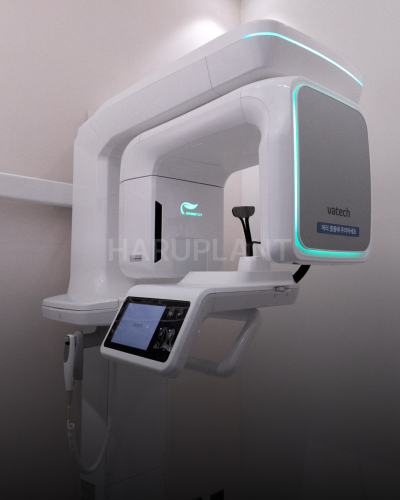
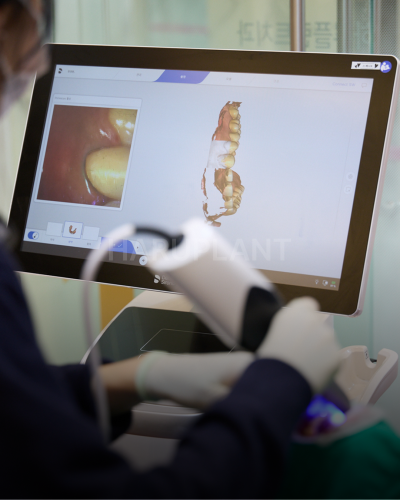
As discussed, complex dental implants require comprehensive evaluation of various factors, including bone volume and density, proximity to nerves and the maxillary sinus,
and the condition of previous surgical sites.
Haruplant Dental Clinic utilizes 8 state-of-the-art 3D CT units, multiple 3D intraoral scanners, and facial scanners
to capture a 3D assessment of the patient's anatomy and pinpoint individual surgical conditions with extreme precision.
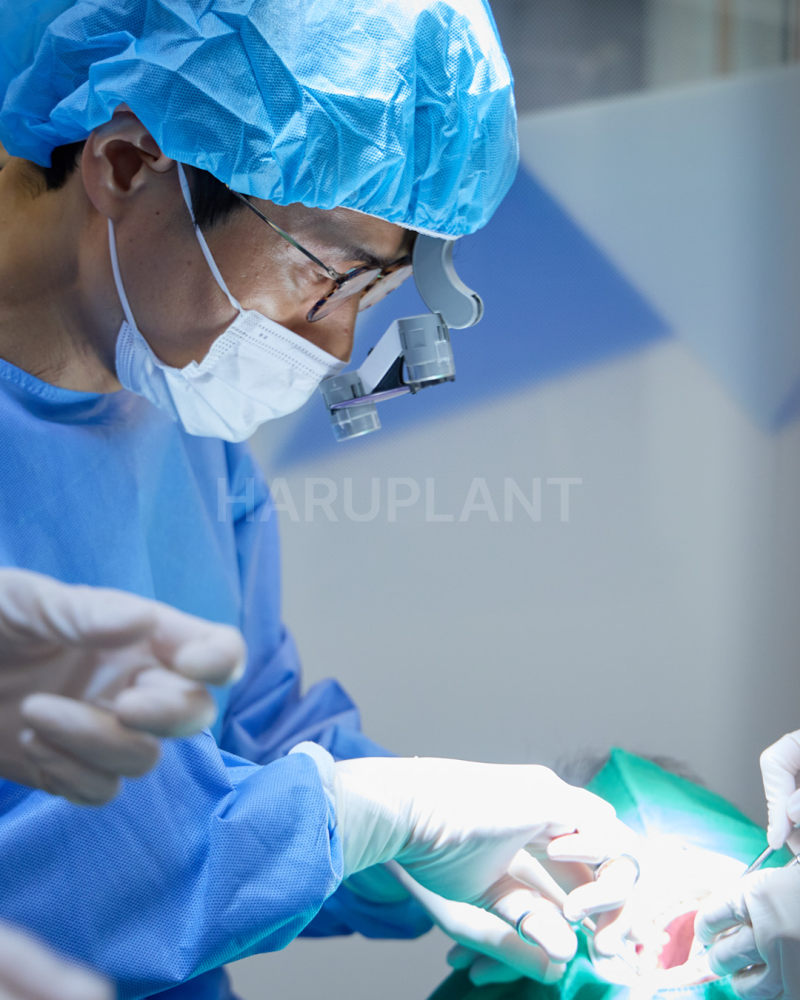
The diagnostic data obtained is translated by our highly experienced surgical team
into tailored treatment plans and precise executions, determining the exact implant position, angulation, necessity and extent of bone grafting, sinus lift technique, and revision strategies.
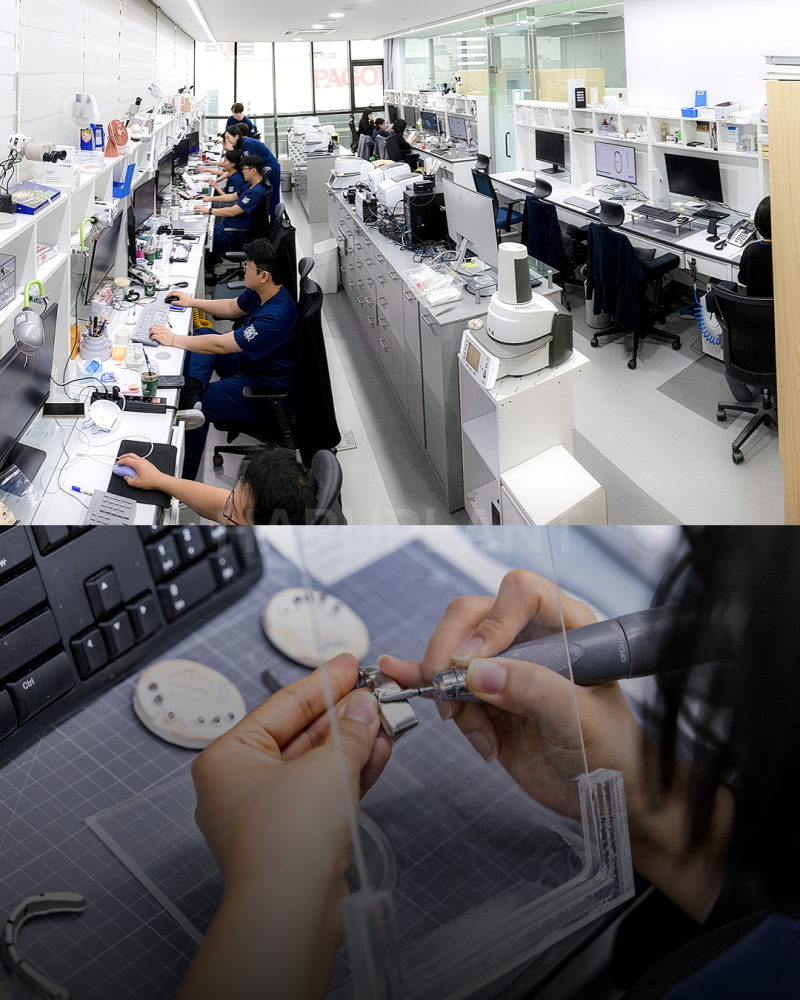
Following surgery, our on-site dental laboratory on the 10th floor fabricates custom prostheses matched to the patient's unique oral anatomy and occlusion
using the digital diagnostic data collected.
By seamlessly integrating every step from precision diagnostics and surgery to custom prosthetic fabrication in-house,
Haruplant Dental Clinic strives to elevate the overall perfection and success of complex implant procedures.
Even under the umbrella term of complex implants, each patient's case is distinct and involves unique anatomical challenges.
Therefore, rather than simply comparing implant brand names or types, it is vital to first identify which factors in your oral condition increase surgical complexity.
In cases requiring additional procedures like sinus augmentation or revision surgery, an accurate initial assessment is especially crucial.
If you require treatment, we recommend receiving a professional, in-depth evaluation at a qualified clinic.
For dental implants, trust Haruplant Dental Clinic at Gangnam Station.

Frequently Asked Questions
Can I get dental implants if I don't have enough jawbone?
Yes, placement is possible when combined with precise bone grafting. However, if there is severe bone resorption or degraded bone density due to advanced periodontal disease or long-term tooth loss, rebuilding sufficient bone and planning precise placement angles makes it a high-difficulty surgical case.
Why is proximity to the inferior alveolar nerve dangerous?
Because nerve damage can lead to sensory alterations such as numbness in the lower lip and chin. In the lower molar area, the implant site may be mere millimeters from the nerve, requiring 3D CT scans to verify nerve paths and precisely determine placement depth and angulation to avoid nerve injury.
When is a sinus lift necessary?
It is necessary when the alveolar bone in the upper molar region is too thin to securely anchor an implant. When the sinus floor has dropped after tooth loss, a sinus lift carefully elevates the sinus membrane and fills the space with graft material to establish adequate bone height for stable fixation.
Why is implant revision surgery more challenging than standard surgery?
Because revision cases typically involve active inflammation, significant bone loss, and soft-tissue damage, resulting in unfavorable surgical conditions. A comprehensive, precise plan is required to rehabilitate the damaged site while ensuring the newly placed implant integrates and stabilizes securely.