2026-10-23
Want to Shorten Your Implant Timeline? Why Plasma Technology Is Drawing Attention
Implant timelines vary by bone condition and osseointegration. Here's how plasma surface treatment may support early bonding, plus what to check when choosing a clinic.

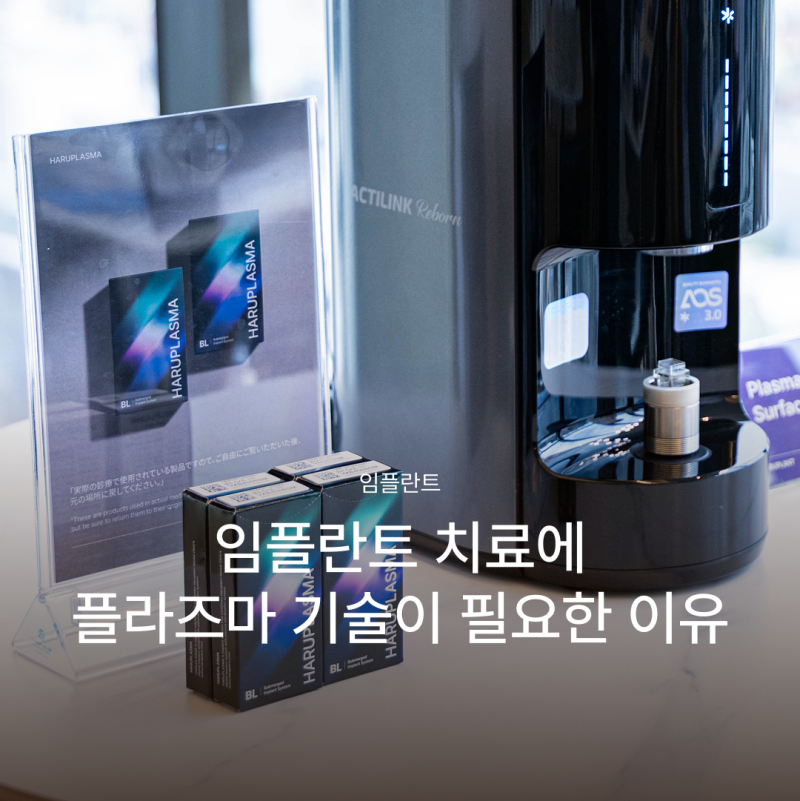
Hello,
A comfortable everyday life starts with Haru. This is Haru Plant Dental Clinic.
When you're preparing for implant treatment, "How long will it take?" is a question almost everyone wonders about.
The actual implant timeline varies from person to person depending on the condition of the alveolar bone, the number of implants placed, whether a bone graft is needed, and how quickly each patient heals.
An implant requires placing the fixture, which serves as the root of the implant, into the gum, and then going through osseointegration, the process by which it firmly bonds with the surrounding bone.
Because the next prosthetic stage can only begin once osseointegration proceeds stably, the time spent on this process is a major factor in determining the overall implant timeline.
That's why in recent years, plasma technology has been adopted at implant dental clinics to create an environment that favors early osseointegration and help patients achieve a faster implant timeline.
Plasma implants increase the hydrophilicity of the implant surface, creating an environment where blood and tissue can contact the surface more smoothly and supporting early osseointegration.
As a result, the implant can bond with the surrounding alveolar bone more quickly and stably,
and depending on the patient's condition, this can also have a positive effect on recovery time and help the patient move on to the next prosthetic stage more quickly.
The Fourth State of Matter: What Is Plasma?
Plasma is often called the "fourth state of matter," following solids, liquids, and gases.
When high energy is applied to a gas, it becomes plasma, the fourth state of matter.
Plasma particles have excellent surface-cleaning and activating properties, so they are used in implant surface treatment and the sterilization of medical instruments.
Implants that undergo plasma treatment gain higher hydrophilicity and biocompatibility,
which can help the implant fixture and the alveolar bone bond quickly and stably,
and depending on the patient's condition, it may also be expected to help shorten the overall implant timeline.
Plasma Surface Treatment Technology That Enhances the Biocompatibility of Implant Surfaces
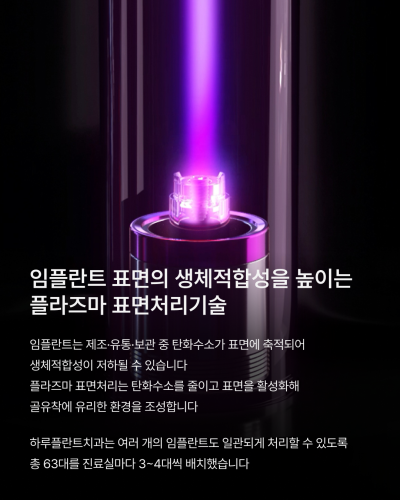

During manufacturing, distribution, and storage, implants can accumulate organic substances such as hydrocarbons on their surface.
Such contamination can affect the hydrophilicity and biocompatibility of the implant.
Plasma surface treatment reduces hydrocarbons and enhances hydrophilicity and biocompatibility, creating an environment where the implant surface can contact blood more effectively.
An implant with higher hydrophilicity and biocompatibility can help early osseointegration proceed smoothly,
and depending on the patient's condition, it may also be expected to have a positive effect on the implant timeline.
Haru Plant Dental Clinic operates a total of 63 plasma surface treatment units, with 3 to 4 units placed in each treatment room, so that plasma treatment can be carried out quickly and seamlessly even when multiple implants need to be placed.
In addition, to apply the benefits of plasma technology effectively to implant treatment, Haru Plant Dental Clinic offers plasma-dedicated implants co-developed by Dr. Im Yu-bong, a KAIST-trained physics PhD who developed the plasma surface treatment unit, and Dr. Byun Sung-man, the clinic's chief director, a Seoul National University School of Dentistry graduate with 27 years of clinical implant experience.
When looking into plasma implants, it's also a good idea to check whether the clinic has the equipment and systems in place to apply them in actual treatment.
Plasma Sterilization System for Thorough Hygiene Management
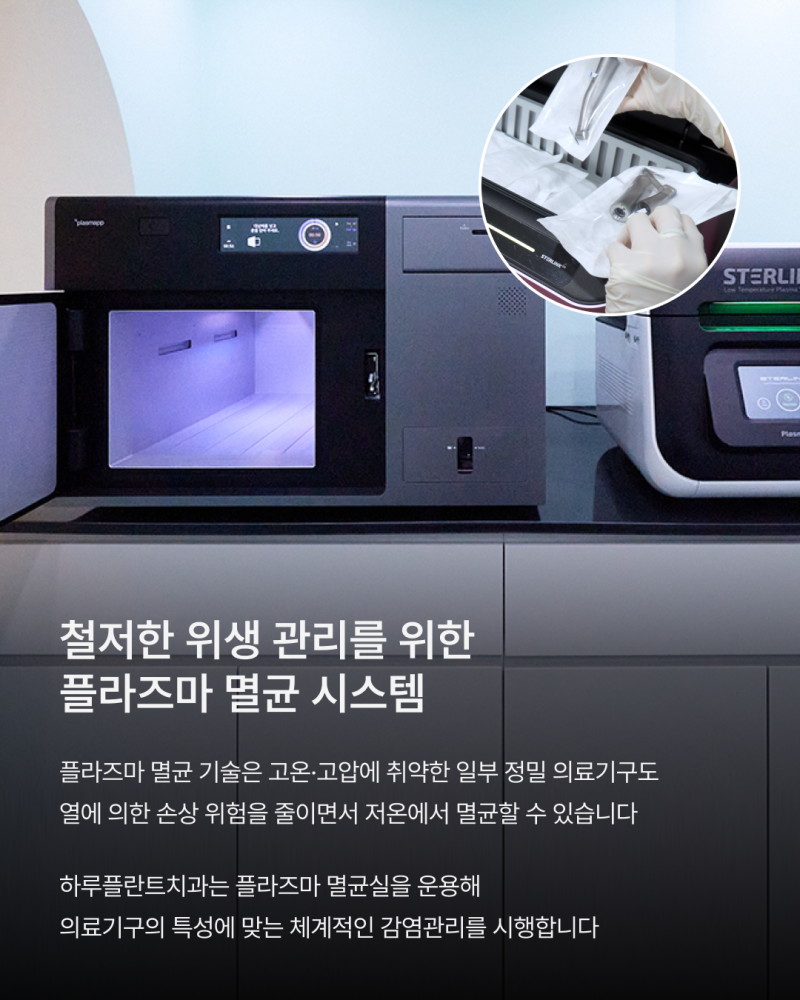
Plasma technology is used not only for implant surface treatment but also for sterilizing medical instruments.
Instruments that come into contact with the patient's oral cavity require especially thorough hygiene and sterilization management.
When plasma is used in the sterilization system, even precision instruments that are vulnerable to high heat and pressure can be thoroughly sterilized at low temperatures, reducing the risk of heat-related damage.
Haru Plant Dental Clinic operates a separate plasma sterilization room to carry out infection control suited to the characteristics of each medical instrument.
When choosing an implant dental clinic, it's advisable to check not only the implant timeline and implant pain, but also the infection control system.
Haru Plant Dental Clinic's Treatment System That Maximizes the Value of Plasma Technology

Haru Plant Dental Clinic wants to provide patients with a more comfortable and stable treatment outcome,
and continues to pay attention to advanced implant technologies that can shorten the implant timeline and reduce implant pain,
and works to apply them in actual clinical practice.
Plasma implants are one part of these efforts to build such a clinical environment.
Studies in Korea and abroad, including research from Harvard University, have confirmed improved osseointegration of implants after plasma surface treatment,
and in clinical practice, it is being used as a technology that can help with faster recovery and stable implant treatment.
Haru Plant Dental Clinic is building a system that supports this technology, combining it with the clinical experience of its medical staff so that plasma technology can be applied effectively in clinical settings.
If you are considering an implant dental clinic,
please check in advance how the clinic manages implant pain and how its treatment system operates.
For implants, visit Haru Plant Dental Clinic near Gangnam Station.

Frequently Asked Questions
Why does the implant timeline differ from person to person?
The timeline varies due to differences in alveolar bone condition, the number of implants placed, whether a bone graft is needed, and healing speed. The article explains that the osseointegration period, during which the fixture bonds with the bone, is a key factor in determining the overall implant timeline.
What is implant osseointegration?
Osseointegration is the process in which the fixture, which serves as the root of the implant, is placed into the gum and then firmly bonds with the surrounding bone. The article explains that this process must proceed stably before the next prosthetic stage can begin.
How do plasma implants help?
Plasma surface treatment is presented as a method that supports early osseointegration by increasing the hydrophilicity of the implant surface. It is said to create an environment where blood and tissue can contact the surface more smoothly, helping the implant bond with the alveolar bone.
Do plasma implants always shorten the implant timeline?
It is difficult to say definitively that they always shorten it. The article explains that a positive effect can be expected depending on the patient's condition. The timeline may still vary depending on factors such as alveolar bone condition and the number of implants placed.
What should I check when choosing an implant dental clinic?
The article advises checking not only the implant timeline and implant pain but also the infection control system. It also suggests reviewing the equipment and systems used in actual treatment, such as plasma surface treatment units and sterilization systems.
What is plasma used for in dental treatment?
Plasma is used for implant surface treatment and the sterilization of medical instruments. Plasma sterilization is presented as a way to treat precision medical instruments that are vulnerable to high temperature and pressure at low temperatures, reducing the risk of heat-related damage.