2026-09-17
Curious About Bone Graft Implants? Procedure, Timeline, and Pain Explained
Understand bone graft dental implants: why they are needed, simultaneous vs. staged procedures, recovery timelines (3-6 months), and how computerized anesthesia minimizes pain.
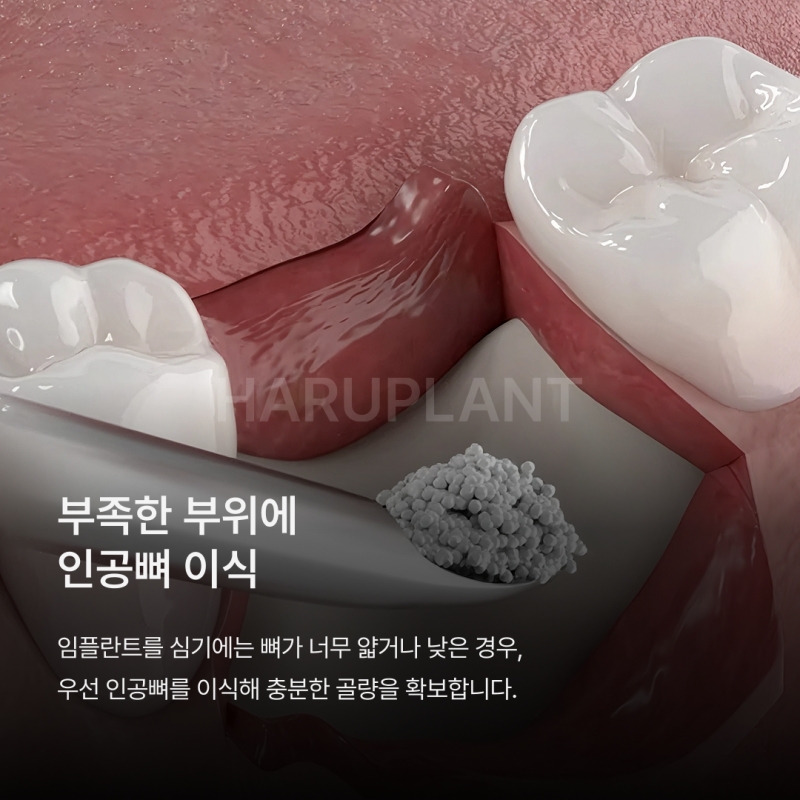
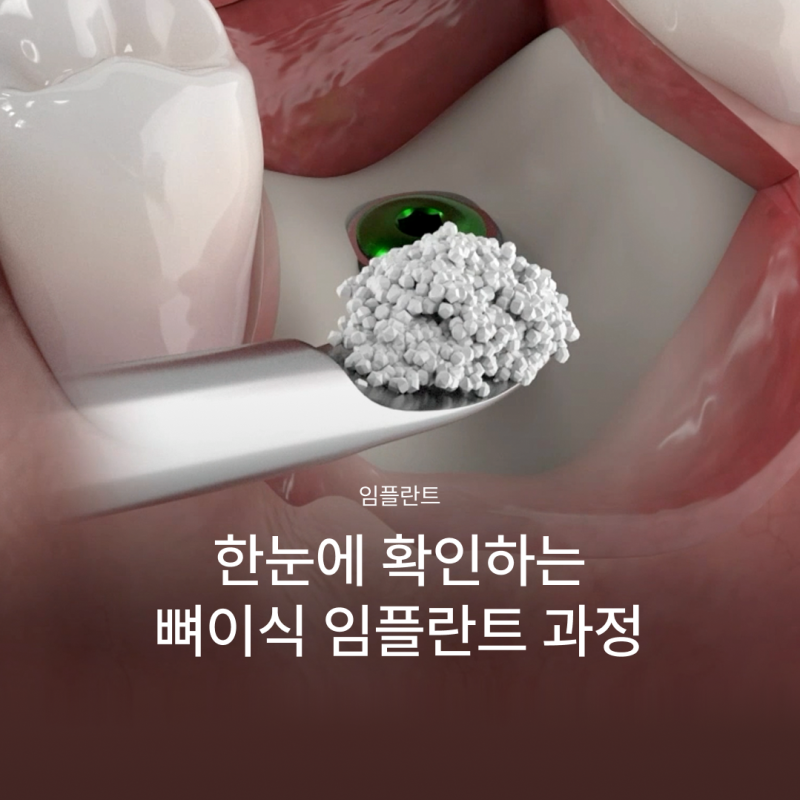
Curious about bone graft implants? Here is a clear guide covering the bone graft implant procedure, timeline, and pain levels.
Hello!
Your journey to a comfortable day begins with Haruplant Dental Clinic!
When consulting with patients considering dental implants, we often hear questions like:
"I came in for an implant—do I really need a bone graft too?"
or "Is a bone graft absolutely necessary?"
"Is bone graft implant surgery very painful?"
For patients encountering implant treatment for the first time, the term "bone graft" can sound unfamiliar and may lead to worry that it involves major surgery.
That is why today, we would like to explain what bone graft dental implants are, how the bone graft procedure is performed, and answer common questions about the timeline and pain levels involved.
Why Bone Grafting Is Necessary
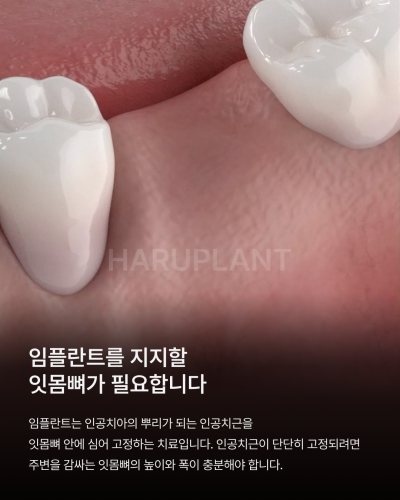
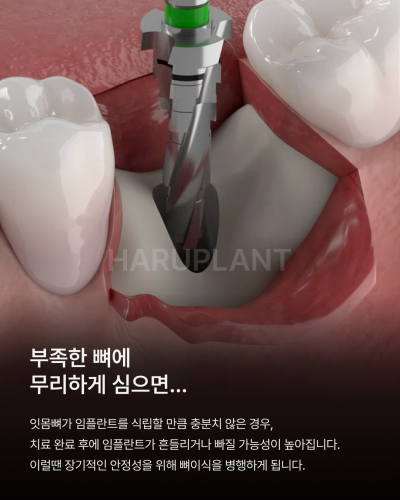
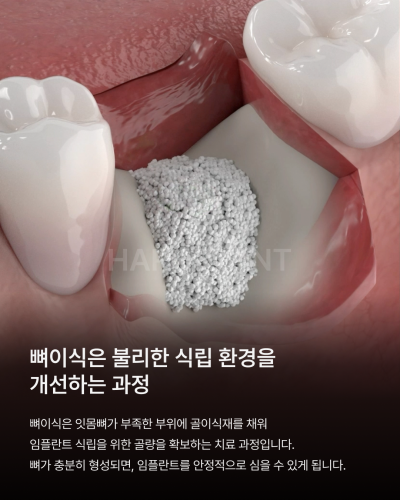
A bone graft implant is a treatment where artificial bone, autogenous bone, or other graft materials are used to reinforce the jawbone when the existing bone volume is insufficient, allowing the implant to be placed securely.
An implant is not simply placed on top of the gums; the fixture, which functions as an artificial tooth root, must be firmly anchored within the jawbone.
If a fixture is placed forcefully into bone that is too thin or shallow, achieving initial stability becomes difficult, which can compromise long-term success.
Therefore, during a bone graft implant procedure, bone graft material is added to deficient areas to create a solid foundation for the implant to integrate.
Bone grafting is not performed unnecessarily on every patient. It is selectively recommended only when essential for secure implant placement, based on precise diagnostics and the judgment of experienced clinicians.
Additionally, depending on the condition of the patient's jawbone, bone grafting can either be performed simultaneously with implant placement or as a preliminary step, allowing sufficient healing time before placing the implant.
When performed simultaneously, it reduces the number of gum incisions and surgical visits, helping to minimize physical discomfort and clinic visits.
On the other hand, a staged procedure is chosen when the clinician determines that sufficient bone regeneration must occur first before implant placement can safely take place.
When Bone Grafting and Implant Placement Are Done Simultaneously
Even when jawbone is lacking, in most cases, initial stability can still be achieved if there is an adequate baseline amount of bone.
In these situations, an optimal environment for bone regeneration can be created while placing the implant at the same time.
However, whether this approach is suitable depends on precise diagnostic results, requiring thorough confirmation of bone volume, position, and local site conditions.
When simultaneous placement is deemed feasible, local anesthesia is administered, and the gum tissue is gently opened to access the surgical site for grafting and implant placement.
Next, the fixture (artificial root) is placed into the jawbone, and bone graft material is packed around deficient areas surrounding the fixture to reinforce bone volume.
When necessary, a barrier membrane is placed to block external irritation and prevent gum tissue cells from invading the graft area, after which the gums are sutured.
Following suturing, a sufficient healing period is allowed for the bone and fixture to fuse securely (osseointegration). The gum is then reopened to attach the abutment, which connects the fixture to the crown, and the final artificial tooth is secured.
When Bone Grafting Is Performed First (Staged Approach)

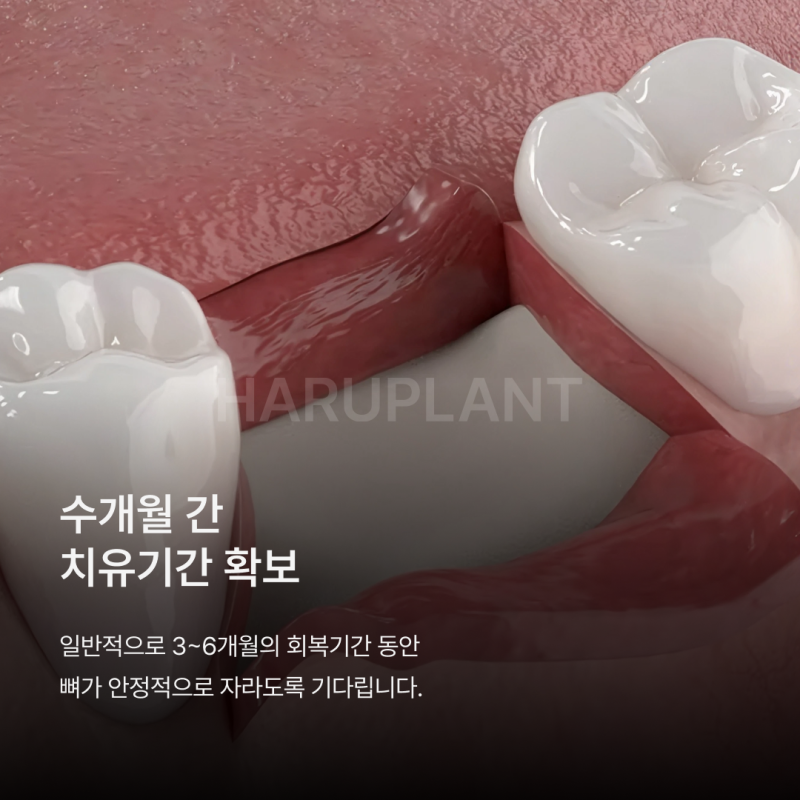
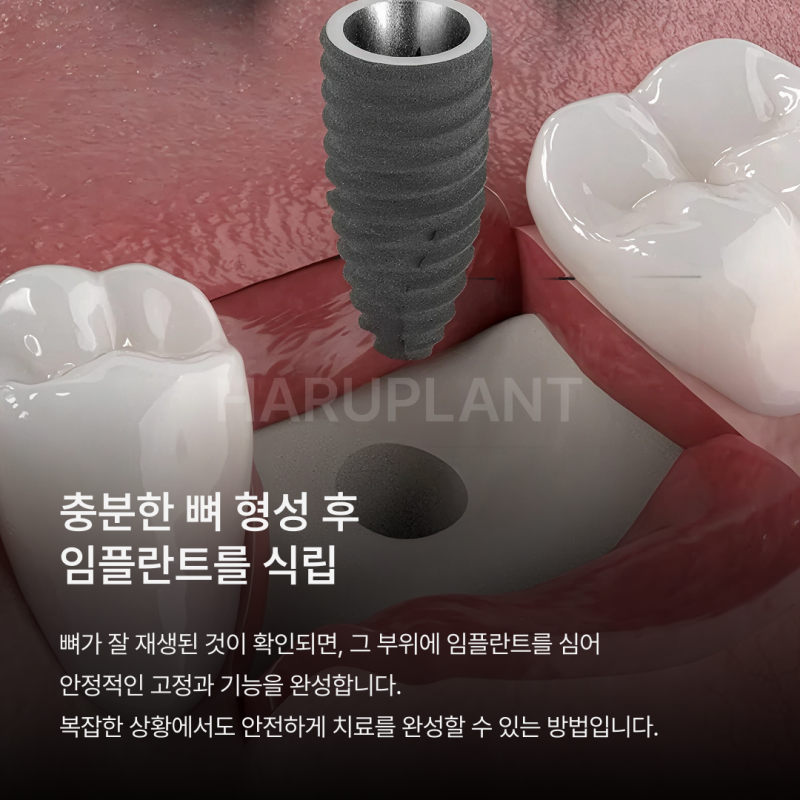
In cases where severe bone resorption has left the jawbone excessively thin or shallow, or where the implant site is very close to critical anatomical structures like the maxillary sinus or nerve canals, a two-stage approach is required: bone grafting is performed first, followed by several months of healing before placing the implant.
Here is a brief overview of the staged procedure:
First, precise diagnostics identify the areas where bone volume is insufficient, and bone graft material is placed at the target site.
Next, a barrier membrane is placed over the graft material, and the gums are sutured. A healing period of several months is then observed to allow new bone to regenerate and stabilize.
Generally, after a recovery period of 3 to 6 months, once stable bone formation is confirmed, the dental implant is placed into the grafted area.
In this way, the overall treatment timeline can vary depending on whether the bone graft and implant are placed simultaneously or in stages.
Furthermore, because timelines differ based on individual bone volume, graft extent, and general health conditions, it is important to undergo a detailed consultation to understand your specific oral condition and receive a customized treatment schedule.
How Much Pain Is Involved in a Bone Graft Implant?
What many patients worry about most is the pain associated with bone graft implants.
Because the procedure is performed under local anesthesia, patients generally do not feel significant pain during surgery once anesthesia takes full effect.
In fact, many patients worry more about the anesthesia injection itself than the surgery.
To relieve discomfort caused by the pressure of anesthetic infiltration, Haruplant Dental Clinic uses a computerized painless anesthesia delivery system that injects anesthetic slowly at a controlled pressure and rate, minimizing injection pain.
Additionally, our skilled clinicians carefully adjust the injection site, depth, and volume based on each patient's gum condition and treatment area, striving to make even the anesthesia process as comfortable as possible.
We have covered the essentials of bone graft dental implants, including the procedure, timeline, and pain management.
If you are currently considering dental implants, having an accurate assessment of your oral and bone condition to see if a bone graft is needed is a great first step.
For dental implants, trust Haruplant Dental Clinic near Gangnam Station.

Frequently Asked Questions
Is a bone graft always necessary for dental implants?
No, it is not required for every patient. A bone graft is selectively recommended after precise diagnostic evaluation only when the jawbone is too thin or deficient to provide stable anchorage for the implant fixture.
Can a bone graft and implant placement be performed at the same time?
Yes, if an adequate baseline of bone exists to secure initial stability, both can be performed simultaneously. Simultaneous placement reduces surgical stages and gum incisions, lessening physical strain and minimizing clinic visits.
How long does recovery take if bone grafting is performed first?
Generally, a healing period of 3 to 6 months is required after bone grafting. In cases of severe bone loss or proximity to the maxillary sinus or nerve canals, the graft is placed first, and the implant is inserted once stable bone regeneration is confirmed.
Is bone graft implant surgery painful?
No, because the procedure is carried out under thorough local anesthesia, patients rarely feel notable pain during surgery. Additionally, injection discomfort can be minimized using a computerized painless anesthesia delivery system that controls pressure and speed.